
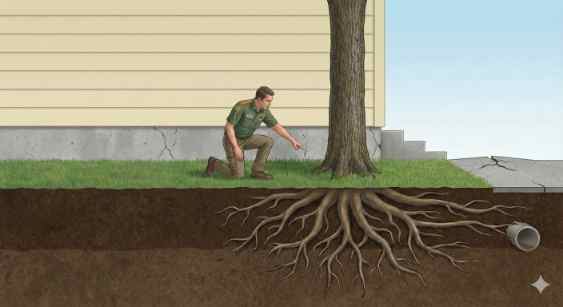
As an owner of mature trees, you know the value they add to your property. However, the unseen root system can sometimes pose a risk to your foundation, driveways, and underground utilities. At Out on a Limb Tree Service, we believe in proactive care. Understanding how tree roots grow and how to manage them is the key to protecting your home investment and avoiding the necessity of a difficult tree removal down the road.
Table of Contents
- Understanding Tree Root Spread
- The Risks of Invasive Root Systems
- Prevention Strategies for Homeowners
- When Root Damage Requires Professional Removal
- Frequently Asked Questions
- Contact Us Today
Understanding Tree Root Spread
The most common misconception about tree roots is that they grow deep, mirroring the tree’s canopy above ground. In reality, most tree roots are quite shallow and tend to spread outwards, not down.
Definition: Root Flare
The root flare is the base of the tree where the trunk widens as it meets the ground and the large structural roots begin to emerge. This visible flare is an indicator of where the main root system starts to spread horizontally.
For most trees, the root system spreads horizontally $2-3$ times the width of the tree’s canopy. These shallow roots seek water and nutrients, which is why they are often attracted to leaky pipes or the consistent moisture found under structures.
The Risks of Invasive Root Systems
When roots grow unchecked, they can cause serious and expensive damage to your property’s hardscapes. The type of damage often depends on the type of structure being affected.
Common Root Damage Risks:
- Cracked Foundations: Roots growing under a foundation can lift and crack the concrete slab, or, more commonly, they can aggressively dry out the soil underneath, causing the foundation to settle unevenly.
- Lifted Driveways and Sidewalks: As a root grows and expands, it exerts pressure on paving, causing cracks, heaving, and uneven surfaces that pose a tripping hazard.
- Damaged Underground Utilities: Roots are highly attracted to the moisture in leaky sewer or water pipes, growing into cracks and clogging or eventually fracturing the line.
- Septic System Issues: Roots can quickly infiltrate drain fields, causing costly backups and system failure.
Prevention Strategies for Homeowners
The best way to manage root risks is to plan ahead and practice preventative maintenance.
Key Root Management Practices:
- Plant at a Safe Distance: When planting new trees, know the mature size of the species. A general rule is to plant large trees at least 20 feet away from foundations and major utility lines.
- Use Professional Tree Placement: Consult with an arborist to select species with less aggressive root systems for areas close to hardscapes. We can help you pick the right tree for the right place.
- Root Barriers (Use with Caution): These are vertical barriers installed underground to deflect growing roots. They must be installed correctly and to the appropriate depth to be effective; improper installation can cause more harm than good.
- Practice Deep Watering: Watering the tree’s critical root zone correctly encourages the roots to grow away from structures and pipes, seeking moisture further out in the landscape.
When Root Damage Requires Professional Removal
Once a root system has cracked a foundation or infiltrated a major water line, quick action is required to prevent further damage. If foundation repair experts confirm that a specific root is the cause of structural movement, it is time to call for professional services.
| Situation | Required Service | Why a Pro is Essential |
| Foundation Cracks | Targeted Difficult Tree Removal | Requires precise removal and stump grinding to ensure the root system dies and reduces pressure without destabilizing the surrounding soil. |
| Heaving Pavement | Stump Grinding | Removal of the tree and grinding the stump eliminates the active growth causing the lift, allowing for future repair of the hardscape. |
| Pipeline Infiltration | Tree Removal | The entire tree must be removed to prevent future root growth and allow plumbers to repair the pipe safely. |
Frequently Asked Questions
Q: Will cutting a root fix a sidewalk crack?
A: Cutting the root will stop the immediate heaving, but it can be dangerous to the tree’s stability and should only be done by an arborist who can assess the risk of the tree toppling over.
Q: Can I use chemicals to kill roots in my sewer line?
A: While chemical treatments exist, they should be used cautiously. They can sometimes harm the entire tree or damage the pipe itself if not applied correctly by a professional.
Q: Does stump grinding prevent root growth?
A: Yes. Grinding the stump and the main root crown prevents further growth. The remaining roots will naturally decompose over time, which reduces the pressure on structures.
Q: Is there a safe distance to plant small trees from a patio?
A: For small trees that mature at under 30 feet tall, a minimum distance of 8 to 10 feet from sidewalks, patios, or foundations is generally recommended.
Q: What is the most important part of root care?
A: The most important practice is proper watering. Consistent, deep watering keeps the roots healthy and prevents them from aggressively seeking out moisture in your pipes and foundation.
Q: What if I have an urgent root problem near my house?
A: If the issue is urgent and structural, call us immediately. We specialize in emergency tree removal services and difficult removals near structures to mitigate further risk.
Out on a Limb Tree Service: Rooted in Safety
Your landscape should be a source of pride, not financial worry. By being aware of root risks and knowing when to call an arborist, you can protect your foundation and your trees simultaneously. Don’t let root intrusion compromise your investment—contact us today for a free estimate and professional guidance on your tree care needs.
Author & Date:
By Out on a Limb Tree Services
Last Updated: September 15, 2025